Search: cavalier/info-lgs@agrotis.it/info-lgs@agrotis.it – Page 4

Need a new search?

If you didn't find what you were looking for, try a new search!

Xantinuria, tipo 2 – Manchester Terrier

La xantinuria è un disturbo metabolico che provoca un eccesso di xantina nelle urine, che porta alla formazione di calcoli urinari e relative complicanze. La xantinuria di tipo II è causata da una mutazione recessiva del gene MOCOS. La variante del disturbo analizzata in questo test si trova nel Manchester Terrier. Varianti correlate sono state osservate anche nel Cavalier King Charles Spaniel e nel Bassotto.
Xanthinuria, tipo 2 – variante Spaniel

La xantinuria è un disturbo metabolico che provoca un eccesso di xantina nelle urine, che porta alla formazione di calcoli urinari e relative complicanze. La xantinuria di tipo II è causata da una mutazione recessiva del gene MOCOS. La variante del disturbo analizzata in questo test si trova nel Cavalier King Charles Spaniel e nel Cocker Spaniel inglese. Varianti correlate si trovano anche nel Bassotto e nel Manchester Terrier.

Immunodeficienza primaria di tipo 2 (PIPS2, CARMIL2-correlata) – CKCS

L’immunodeficienza primaria di tipo 2, nota anche come PIPS2, è un disturbo da immunodeficienza nei cani spesso associato al fungo Pneumocystis pneumonia (PCP). Per questo motivo, viene anche definita immunodeficienza primaria con suscettibilità allo pneumocystis.

La malattia è causata da una mutazione autosomica recessiva nel gene CARMIL2. I cani affetti non sono in grado di produrre una proteina fondamentale per la corretta funzione immunitaria, il che li rende altamente suscettibili alle infezioni respiratorie. Questa variante del disturbo si trova specificamente nel Cavalier King Charles Spaniel.

Sindrome della caduta improvvisa – EFS (laboratorio esterno con brevetto)

La sindrome da caduta improvvisa (EFS), chiamata anche ipertonità episodica, iperecheplessia o distonia parossistica indotta dall’esercizio, è un disturbo neurologico che si trova nel Cavalier King Charles Spaniel. La malattia provoca episodi di rigidità muscolare che possono immobilizzare temporaneamente i cani colpiti. È causata da una mutazione recessiva del gene BCAN.

Xantinuria tipo 2 – Bassotto

La xantinuria è un disturbo metabolico che provoca un eccesso di xantina nelle urine, che porta alla formazione di calcoli urinari e relative complicanze. La xantinuria di tipo II è causata da una mutazione recessiva del gene MOCOS. La variante analizzata in questo test si trova nel Bassotto. Varianti strettamente correlate si verificano nel Cavalier King Charles Spaniel e nel Manchester Terrier.

Sindrome della caduta improvvisa – EFS (laboratorio esterno)

La sindrome da caduta improvvisa (EFS), chiamata anche ipertonità episodica, iperecheplessia o distonia parossistica indotta dall’esercizio, è un disturbo neurologico che si trova nel Cavalier King Charles Spaniel. La malattia provoca episodi di rigidità muscolare che possono immobilizzare temporaneamente i cani colpiti. È causata da una mutazione recessiva del gene BCAN.

Ordine

Prodotti

Nel nostro negozio online CombiBreed puoi ordinare test del DNA per cani, gatti e cavalli. Seleziona la specie animale giusta per la gamma di test del DNA disponibili e applicabili. Il nostro strumento di selezione ti aiuterà a selezionare i test del DNA giusti. Ci sono tre opzioni:

  • Test singolo; ordina un unico test per il tuo animale (tutti i tipi possibili)
  • Pacchetto CombiBreed; abbiamo realizzato pacchetti per molte razze con l’aiuto di club di razza e libri genealogici.
  • Create your own package; do you want to combine DNA tests in a package for your animal? Then you can easily create your own package. Use the selection tool to easily display the relevant tests for your animal.


Product Types

Within our webshop we distinguish between different product types:

Parentage
Parentage verification is based on the comparison of genetic information from Offspring, Dam and Sire.

Genetic Diseases
Genetic Disease refer to genetic disorders in animals.

Genetic Traits
Genetic trait refers to the external characteristics of an animal such as coat colours and coat variants.

Blood Typing
Our blood typing tests are only available for cats. We offer both DNA and seriological tests.

Packages

Our CombiBreed packages are composed for various breeds. These packages will be expanded as new tests become available.

External Lab test
External Lab tests are patented in certain countries. These tests will be forwarded to a partner laboratory in non-patented territory.

Selection Tool

Using the selection tool you can filter on the tests that are relevant to you. All genetic disease related DNA tests are in many cases developed for specific breeds. This means that the DNA tests are relevant for one or more breeds. A number of DNA tests are suitable for all breeds.

How do I order DNA tests?

Step 1: add products
When you have found a product in our webshop, add it. You can always find your shopping cart in the top right corner, so you can always see what you have shopped. Do you not wish to order the product? Products are easy to remove from your shopping cart.

Step 2: fill in personal details
To place an order you need to create an account. This is necessary because the results of DNA tests will become available within your account. So keep your login details safe! When creating an account you can enter your personal details. Do you already have an account? Then log in with your details. Data can be changed at any time.

Step 3: animal data
In order to be able to perform the DNA tests and to recognize DNA material, we need the animal data. Enter the details of your animal, such as the unique identification number and name. This animal data is also shown on the report. Once the order has been processed, animal data can no longer be changed. So be careful when entering the animal data. Have you ordered multiple products? You can enter the animal data for each test or package.

Step 4: check order and pay
Before you place and pay for the order, we kindly ask you to check the order again. If you have any questions, please contact our customer service. Select the desired payment method, we offer you various options. Once payment has been received by us, we will process your order.

Step 5: shipping DNA kit & sampling
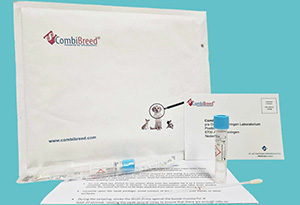
After receiving the order you will receive a swab kit for dogs and cats. This swab kit contains instructions for removing buccal mucosa using the swab. We like to receive hairs to perform DNA tests for horses. Note that these hairs contain hair roots, because we are not able to extract DNA from hair samples that do not contain hair roots.

Your webshop account

Do you already have a profile in our webshop? Then you can easily log in via the button at the top of the webshop. After logging in you will arrive in your profile. All’interno di questo profilo troverai i tuoi dati personali, i dati sugli animali e i risultati dei test.

CombiBreed Health Package for Dogs

Scopri i dettagli genetici del tuo amato cane!

Questo pacchetto completo offre un’approfondita analisi del patrimonio genetico del tuo cane, fornendoti preziose informazioni sulla sua salute e sui caratteri distintivi.

  • Test per oltre 330 condizioni genetiche di salute
  • Informazioni su più di 40 tratti genetici
  • Coefficiente di Inbreeding
  • Eterozigositá (Diversità Genetica)

Tempo di consegna: 15-20 giorni lavorativi

€ 146,95 IVA inclusa

€ 121,44 IVA esclusa

Modifica la quantità nel tuo carrello se desideri ordinare pacchetti multipli.

Cosa è incluso?

Condizioni di salute: Prioritizza il benessere del tuo cane con un’analisi completa della salute. Identifica potenziali rischi genetici di salute e predisposizioni, consentendoti di intraprendere misure preventive per la sua salute a lungo termine, felicità e riproduzione.

Caratteri distintivi: Scopri i tratti affascinanti che rendono unico il tuo cane. Dal colore e dalla lunghezza del pelo a diversi schemi del pelo, il nostro test del DNA esplora in profondità i fattori genetici che influenzano l’aspetto e le caratteristiche del tuo cane.

Coefficiente di Inbreeding (COI): Il COI ti fornisce informazioni cruciali per prendere decisioni informate sulla riproduzione, l’assistenza sanitaria e le potenziali predisposizioni genetiche.

Eterozigosità: Mantenere un certo livello di eterozigosità è importante nei programmi di allevamento per evitare un accumulo eccessivo di tratti recessivi dannosi e promuovere la salute genetica complessiva nella popolazione canina.

Abbiamo un tasso di successo dei test del 95% nella consegna del rapporto finale sulla salute.

Maggiori informazioni? Clicca qui per le nostre FAQ.

Ultimo aggiornamento 21.08.2025

Come funziona?

swab
results

Ordina in pochi clic!

Aggiungi il pacchetto CombiBreed Health Package for Dogs al tuo carrello e fornisci i dettagli tuoi e del tuo cane. Queste informazioni aiutano nella gestione del tuo ordine e faranno parte del tuo rapporto completo sulla salute. Se sei nuovo su CombiBreed? Crea un account per accedere ai risultati dei test nel nostro portale online, sbloccando informazioni sulla salute del tuo cane.

Raccogli il materiale del DNA

Segui la guida passo-passo fornita nel nostro kit per campionare, che include 2 tamponi. È un processo veloce che puoi eseguire a casa. Imballa i tamponi in modo sicuro e inviali al nostro laboratorio. Assicurati che ciascun tampone sia contrassegnato con il nome del tuo cane e il numero di microchip o registrazione per garantire una lavorazione accurata.

Analisi del DNA

I nostri esperti gestiscono i dati genetici del tuo cane con la massima cura, assicurandosi che ogni dettaglio sia esaminato attentamente. Facciamo il massimo per garantire l’affidabilità. I nostri rigorosi controlli di qualità sono progettati per fornirti risultati su cui puoi contare.

Risultati disponibili

Ti avviseremo via email quando i tuoi risultati saranno pronti per essere visualizzati nel portale online di CombiBreed. Una volta che almeno il 50% dei risultati è disponibile, puoi accedere al tuo account per ottenere preziose informazioni online. Quando tutti i test saranno completi, riceverai il rapporto completo sulla salute del tuo cane in formato PDF via email.


Domande frequenti (FAQ)

Cosa significa “Nessun risultato”?

Se il risultato di un test è “Nessun risultato”, non possiamo generare un risultato affidabile. Tuttavia, il campione è di qualità sufficiente per generare un risultato affidabile per gli altri test. L’affidabilità del test eseguito è determinata da analisi ripetute. Se i risultati differiscono tra loro, non possiamo riportare un risultato affidabile. Un “nessun risultato” può verificarsi anche perché un determinato test non ottiene un risultato, mentre i test eseguiti in parallelo forniscono un risultato affidabile. Se desideri ancora un risultato per questo test, puoi riacquistarlo nel nostro negozio online e inviare un nuovo campione.

Posso ordinare più pacchetti di test genetici DNA per diversi cani?

Assolutamente! Puoi ordinare più pacchetti CombiBreed Health per Cani per diversi cani e gestirli tutti all’interno del tuo account CombiBreed per un accesso comodo ai rispettivi risultati. Aggiungi il pacchetto al tuo carrello e gestisci la quantità anche lì.

Perché dovrei considerare il test del DNA per il mio cane?

Il test del DNA può rivelare informazioni cruciali sulla salute del tuo cane, tratti specifici della razza e potenziali rischi genetici. Questa conoscenza ti permette di intraprendere misure preventive per garantire il loro benessere generale e la longevità.

Qual è la differenza tra i pacchetti specifici per la razza di CombiBreed e il pacchetto CombiBreed Health Package for Dogs?

I pacchetti specifici per razza CombiBreed sono stati creati per molte razze canine. I test in questi pacchetti sono tutti pertinenti alla razza specifica. Il pacchetto Health contiene molti test importanti per diverse razze comuni. Vuoi solo capire le condizioni di salute genetiche per la tua razza? Allora ti consigliamo di acquistare un pacchetto specifico per la razza.

Perché l’HNPK non è incluso nel pacchetto Health?

Il test HNPK (Nasal Parakeratosis ereditaria) è brevettato in una parte significativa dell’Europa. Di conseguenza, non siamo in grado di eseguire questo test in uno dei nostri laboratori. Invece, ci siamo associati con un laboratorio esterno situato al di fuori dell’area protetta dal brevetto per eseguire questo test. A causa dei relativamente alti costi associati a questo test, abbiamo deciso di escluderlo dalle nostre offerte standard di pacchetti.

Se sei interessato al test HNPK, puoi ordinarlo separatamente utilizzando il codice del test H675. Si noti che l’HNPK rimane disponibile come parte dei nostri pacchetti CombiBreed specifici per la razza.

Come accedo al vostro Portale Online?

Il nostro portale online è accessibile tramite il tuo account nel nostro negozio online CombiBreed. Fai clic su ‘Portale Online’ nel menu del tuo account personale. La prima volta ti chiederemo di effettuare nuovamente il login per verificare l’utente. La prossima volta potrai fare clic direttamente sul link e accedere immediatamente al nostro Portale Online.

Cosa si intende per test del DNA pertinenti alla razza?

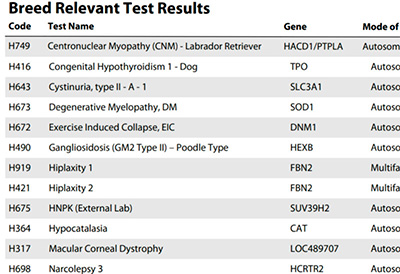
Non tutti i test del DNA sono pertinenti per tutte le razze. Le razze per cui il test è adatto sono descritte nella pagina del prodotto di ciascun test. Nel rapporto del pacchetto CombiBreed Health Package for Dogs, distinguiamo anche tra test pertinenti alla razza e altri test in base ai dati che hai inserito durante l’acquisto.

Come posso sapere che avete ricevuto il campione del mio cane?

Riceverai una conferma via email una volta che avremo ricevuto con successo il campione del tuo cane presso il nostro laboratorio. Questa email ti fornirà l’assicurazione che il campione è stato ricevuto e si trova sotto la nostra cura.

Quali precauzioni devo prendere prima di raccogliere il materiale genetico del DNA?

Per garantire campioni di alta qualità, è consigliabile preparare il tuo cane da 1 a 2 ore prima del campionamento. Durante questo periodo, mantieni il tuo cane separato da altri animali e evita che mangi o beva, tranne che per l’acqua.

Come riceverò i risultati del test?

Una volta che riceviamo i tuoi campioni e li analizziamo, ti avviseremo via email quando i risultati saranno pronti. Accedi al tuo account CombiBreed per accedere ai risultati nel portale online. Un rapporto completo sulla salute ti verrà inviato via email quando tutti i test richiesti avranno risultati.

Le mie informazioni e i dati del mio cane sono al sicuro con CombiBreed?

Sì, prendiamo seriamente la privacy dei dati. Le tue informazioni personali e i dati del tuo cane sono trattati con il massimo livello di riservatezza e sicurezza. Si prega di fare riferimento alla nostra politica sulla privacy per ulteriori dettagli.

Posso condividere i risultati del mio cane con il mio veterinario?

Assolutamente! Condividere i risultati genetici del tuo cane con il veterinario può facilitare piani di assistenza sanitaria più mirati. Usa il rapporto in formato PDF con i risultati per questo. Puoi condividerlo con il tuo veterinario via email o stampato.

Posso raccogliere i campioni da solo o ho bisogno di assistenza professionale?

Puoi raccogliere facilmente i campioni da solo seguendo le istruzioni fornite nel kit per tamponi. Il processo è progettato per l’uso domestico.

Raccogliere il materiale genetico del DNA dal mio cane è sicuro e indolore?

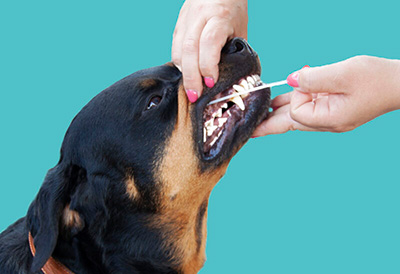
Sì, raccogliere il materiale genetico del DNA utilizzando il kit per tamponi è completamente sicuro e indolore per il tuo cane. È un processo non invasivo che richiede solo di tamponare la guancia interna.

Quanto tempo devo aspettare dopo che il mio cane ha mangiato prima di raccogliere il campione?

Si consiglia di aspettare da 1 a 2 ore dopo che il tuo cane ha mangiato prima di raccogliere il campione. Durante questo tempo, mantieni il tuo cane separato da altri animali e permettigli solo di bere acqua.

Posso utilizzare il pacchetto CombiBreed Health per qualsiasi razza di cane?

Il pacchetto CombiBreed Health per Cani è progettato per coprire tutte le razze di cani. Ciò significa che, indipendentemente dalla razza del tuo cane, puoi beneficiare delle approfondite conoscenze genetiche fornite dal pacchetto. Otterrai informazioni preziose sulla salute del tuo cane, sui potenziali rischi genetici e su altri tratti rilevanti, indipendentemente dalla razza specifica del tuo cane. Questa inclusività rende il pacchetto di salute del DNA una risorsa versatile e preziosa per tutti i proprietari di cani.

Come posso rimanere aggiornato sullo stato del mio ordine?

Riceverai notifiche via email nelle fasi chiave del processo, come quando riceviamo i campioni, quando i risultati sono pronti per la visualizzazione e quando il rapporto completo sulla salute è disponibile.

Il pacchetto di salute del DNA è adatto ai cuccioli?

Sì, il pacchetto di salute CombiBreed per Cani può fornire informazioni preziose sulla salute e sui potenziali rischi anche per i cuccioli, aiutandoti a gettare le basi per il loro benessere.

Come posso sapere se ho raccolto abbastanza materiale genetico del DNA per l’analisi?

Anche se potresti non vedere materiale genetico visibile sui tamponi, se hai seguito le istruzioni, è probabile che tu abbia raccolto una quantità adeguata di DNA. Il nostro laboratorio effettua controlli di qualità per garantire materiale genetico sufficiente per l’analisi.

Perché devo inviare due tamponi Copan del mio cane?

Considerando la vasta gamma di test del DNA inclusi nel nostro pacchetto di salute CombiBreed per Cani, richiediamo una maggiore quantità di materiale genetico del DNA rispetto ai nostri altri test e pacchetti. Questo richiede il ritorno di due tamponi contenenti materiale genetico del DNA. Al momento dell’ordine, riceverai un kit per tamponi da noi, che include due tamponi Copan e istruzioni dettagliate per il campionamento.

Non ho ricevuto i risultati per tutti i test del DNA, ma il rapporto è già stato finalizzato. Riceverò comunque i risultati per questi test in sospeso?

Il pacchetto comprende oltre 290 test del DNA, ed è possibile che non siamo in grado di fornire risultati per tutti inizialmente. Nei casi in cui non siano disponibili risultati, avvieremo un nuovo test per assicurarci di poter fornire un risultato. Manteniamo un tasso di successo dei test del 95% nella consegna del rapporto finale sulla salute.

Panda White Spotting

A mutation in the KIT-gene is associated with a white spotting pattern in German Shepherd Dogs, this pattern is  also called Panda White Spotting. The mutation is very recent, it appeared spontaneously in a female born in 2000. The gene for white-spotting is known as the S-locus (MITF-Gene), however this mutation in the German Shepherd dogs is in a different gene then the mutation causing white spotting in other dog breeds. The mutation causes white markings on the face, limbs, belly, neck, and tip of the tail, with the white being concentrated toward the front of the dog, similar to the irish spotting pattern. The amount of white can vary from dog to dog. The mutation that causes the Panda White pattern in German Shepherd dogs is in homozygous state (two copies of the mutation) considered embryonic lethal as no live dogs with the pattern and with two copies of the mutation have been observed. This means that pups that are homozygous for the Panda mutation do not develop in the uterus and are reabsorbed very early in the development process. Dogs that are heterozygous (one copy of the mutation) do not have any health defects associated with the Panda pattern. The Coat Colour Panda White Spotting test (H354) tests for the genetic status of the KIT-gene. This gene has two variants (alleles), P and N. The allele P is dominant. One copy of the P allele results in dogs with the Panda white pattern. Two copies of the P allele result in early embryonic death. The allele N does have no effect on the coat colour.

The Coat Colour Panda White Spotting test encloses the following results.

KIT-gene

Coat Colour

N/N

No Panda White spotting unless modified by other colour modifying factors, only allele N will be passed on to an offspring

N/P

Panda White spotting, either allele N or P will be passed on to an offspring

Interpretation Testresults

Availability of DNA tests

Nowadays, scientific articles do not often publish mutations that are also present in other breeds. Therefore, mutations that are described and validated in one breed can also be found in other breeds. The occurrence of these mutations in other breeds is determined by laboratories that carry out the tests. It is difficult to estimate how high the reliability is for a certain test for a particular breed.

The above basis applies in general to hereditary diseases. Hereditary diseases are passed on from one generation to another through defective genes. Nevertheless, inheritance of a disease remains a biological process, and therefore exceptions are still possible. The specific information for a test gives more information about possible deviations.

Our tests do not make recommendations on breeding decisions

Our DNA tests offer you insight into the composition of your animal’s DNA. If possible, we will try to inform you of the optimal choice of tests for your personal situation. You should be aware that our laboratories are not responsible for the breeding decisions that you take. This is due to the complexity of the variation in tests and breeds. We recommend that, for advice concerning breeding decisions, you contact your international or national breed association or vet.

Within a combination package, a single result for a DNA test may be missing from the report

It is possible that a low percentage of results may be missing if a combination package is requested this can be caused due to technical reasons. We consider a combination package ‘fully reported’ if only one or two of the markers within a combination package are missing after retesting. No refund will be provided for missing tests within a combination package.

Combination packages are not 100% complete

Our combination packages will never be 100% complete due to the large number of publications in the scientific literature. We update the packages twice a year, whereby we use the following criteria: a) changes to the breeds in which a DNA test has been validated, b) the type of disease and c) technical criteria.

There is never a fool-proof link between test results and disease symptoms

In general, our tests are based on scientific publications. In these articles, a disease or condition is described with detailed information about the symptoms and background of the DNA test. The test does not guarantee that the animal still has the possibility to develop symptoms. The symptoms can be caused due to unknown genetic mutations. However, after testing positive for a disease an animal will not always develop symptoms. We therefore recommend that you contact your local or international breed association, Management Board or vet for breeding or veterinary advice.

E-Locus (Extension)

The Extension gene (MCR1 gene) controls the production of black and red pigment. In cats, shades of red color are determined by the dominant Orange gene (O-locus) located on the X chromosome. The genetic background of the O-Locus is still unknown. The Extension gene is also known as E-locus. The Coat Colour E locus, extension test (K639) tests for the genetic status of the E-locus. The E-locus has two variants (alleles). It is presumed that (almost) all cats are fixed for the dominant allele E, they have two copies of the dominant allele E and based on this gene alone could produce both red and black pigment. The recessive allele e results in kittens that are born with a black/brown tabby pattern (blue/apricot in dilute cats). As the kittens mature, the black/blue pigment is replaced by yellow resulting in the golden coat coloration seen in adult cats. Originally it was named X Colour, now it is called Amber. The recessive allele can be present in the Norwegian Forest cat and traces back to a single female ancestor from Norway born in 1981. Cats with two copies of the allele e only have the Amber Coat Colour when the dominant O allele at the O-locus is not present.

The Coat Colour E Locus, extension test encloses the following results, in this scheme the results of the Coat Colour E Locus, extension test are shown in combination with the possible results for the O-locus. For the O-locus no DNA test is available:

E-locus

O-locus (no DNA test available)

Coat Colour

E/E

O/O, O/o or o/o (female)

Not Amber

E/E

O/- or o/- (male)

Not Amber

E/e

O/O, O/o or o/o (female)

Not Amber

E/e

O/- or o/- (male)

Not Amber

e/e

o/o (female) or o/- (male)

Amber

e/e

O/O (female) or O/- (male)

Red

e/e

O/o (female)

Amber/red tortoiseshell

W-Locus / S-Locus (Dominant White and White Spotting)

Dominant White and White Spotting are controlled by the KIT-gene. Dominant white is also described as the W-locus and White Spotting as the S-locus. The gene/genes controlling the pattern of White Spotting is still unknown. Additionally, not all white spots or patterns result from the KIT-gene as other genes can also have mutations that result in depigmentation phenotypes.

The KIT-gene has three variants (alleles). The DW allele is dominant over the alleles Ws and N; allele Ws is dominant over allele N. The dominant allele DW results in a white coat colour. The allele Ws in white spotting and the allele N has no effect on the coat colour.

Dominant White is distinct from albinism (C-locus) which results from a mutation in theTYR (tyrosinase) gene that has no known impact on hearing. One or two copies of the DW allele will result in a white cat with varying degrees of hearing impairment.

The Dominant White & White Spotting test encloses the following results:

Dominant White & White Spotting (W- en S-locus) Coat Colour
N/N Not white and no white spotting
N/DW White
DW/DW White
N/Ws Cat has white spotting
DW/Ws White
Ws/Ws Cat has white spotting

Colore del mantello Salmiak

La mancanza di melanociti, causata da mutazioni nel proto-oncogene KIT, è una delle ragioni principali per la colorazione del mantello bianco in numerose razze animali domestiche. Originaria della Finlandia, una recente mutazione recessiva nel gene KIT porta a gatti con macchie bianche “glassate” note come Salmiak o Liquirizia salata.

A-Locus

The Agouti gene (ASIP gene) is responsible for the production of a protein that regulates the distribution of black pigment (eumelanin) within the hair shaft. This gene is also known as the A-locus and determines whether an animal expresses an agouti appearance, and if so what type, by controlling the distribution of pigment in individual hairs. The agouti pattern can be seen in both black-based and red-based colours. The coat colour is further complicated by the interaction with the K-locus and the E-locus. The agouti pattern is only expressed if on the K-locus no copy of the KB allele is present in combination with at least one copy of the E or Em allele on the E-locus. The Coat Colour A-Locus test (H820) tests for the genetic status of the A-locus. The A-locus has four variants (alleles). The most dominant allele is Ay, followed by aw, then at, then a. The dominant Ay allele produces a sable or fawn coat colour. The allele aw produces a colour known as wild sable or wild type. With this colouration, the hairs switch pigmentation from black to reddish or fawn. This colour is sometimes seen in German Shepherds and other shepherd breeds. The allele at results in tan points (tan markings on a dark dog) and produces black-and-tan and tricolour dogs. A tricolour dog is black-and-tan plus white. The allele a is also called the recessive black allele and results in a solid black/brown/blue/lilac or bicolour dog. Some breeds are fixed for only one variant. The Norwegian Elkhound is fixed for the aw allele and the Beagle is fixed for the at allele. In many breeds 2 or 3 alleles are present.

The Coat Colour A-Locus test encloses the following results.

A-Locus Coat Colour
Ay/Ay Fawn/Sable, only allele Ay will be passed on to an offspring
Ay/aw Fawn/Sable, either allele Ay or aw will be passed on to anan offspring
Ay/at Fawn/Sable, either allele Ay or at will be passed on to an offspring
Ay/a Fawn/Sable, either allele Ay or a will be passed on to an offspring
aw/aw Wild sable/Wild type, it can only pass on allele aw will be passed on to an offspring
aw/at Wild sable/Wild type, either allele aw or at will be passed on to an offspring
aw/a Wild sable/Wild type, either allele aw or a will be passed on to an offspring
at/at Tan Points/Black-and-tan/Tricolour, it can only pass on allele at will be passed on to an offspring
at/a Tan Points/Black-and-tan/Tricolour, either allele at or a will be passed on to an offspring
a/a Solid Black(Brown/Blue/Lilac)/Bicolour, it can only pass on allele a will be passed on to an offspring

M-Locus (Merle)

The Silver gene (SILV gene), also called premelanosome protein (PMEL17 gene) is responsible for Merle. This gene is also known as M-Locus. Merle only dilutes eumelanin (black) pigment; dogs with two copies of the allele e (homozygous e/e) at E-Locus have no black pigment, thus do not express merle. Merle is an incompletely dominant coat color pattern characterized by irregularly shaped patches of diluted pigment and solid color. Blue and partially blue eyes are typically seen with merle, and merle dogs often have a wide range of auditory and ophthalmologic defects. Breeds with merle coat pattern are Shetland Sheepdog, Collie, Border Collie, Australian Shepherd, Cardigan Welsh Corgi, Catahoula Leopard Dog, Dachshund, Great Dane, Bergamasco Sheepdog and Pyrenean Shepherd. The Coat Colour Merle test (H630) tests for the genetic status of the M-locus. The M-locus has three variants (alleles): M (merle, SINE with longer poly-A tail), Mc (cryptic merle, SINE with shorter poly-A tail) and N (non-merle, no SINE insertion. Dogs with cryptic merle (also called phantom or ghost merle), typically display little to no merling and some may be misclassified as non-merles.

The Coat Colour Merle test encloses the following results.

M-Locus

Coat Colour

M/M

Merle coat colour, two copies of merle are present (double merle). Dog may exhibit auditory and ophthalmologic defects

M/Mc

Merle coat colour, One copy of merle and one copy of cryptic merle are present. Dog may exhibit auditory and ophthalmologic defects

M/N

Merle coat colour, one copy of merle is present. Dog may exhibit auditory and ophthalmologic defects

Mc/Mc

Cryptic-merle, two copies of cryptic merle are present. The dog is genetically healthy with regards to the merle factor

Mc/N

Cryptic-merle, one copy of cryptic merle is present, the dog is genetically healthy with regards to the merle factor

N/N

Non-merle, no copies of merle or cryptic merle are present, the dog is genetically healthy with regards to the merle factor

Coat Colour Glitter

The glitter coat in cats is a structural variation of the hair shaft rather than a coat colour trait. The trait is caused by a mutation in the Fibroblast growth factor receptor (Fgfr2) gene. The Fgfr2 gene plays a role in embryonic development and organ formation. This mutation causes a moderate reduction in Fgfr2 activity, leading to alterations in hair morphology that produce the characteristic glitter effect. The trait is inherited in an autosomal recessive manner and has been identified in Bengal, Egyptian Mau and Toyger.

Colore del mantello a macchie bianche – W21

The White Spotting coat colour pattern in horses can be caused by any in a wide array of related mutations. The resulting pattern can vary anywhere between white markings on the face and legs, up to a completely white coat. Depending on both breed and pattern, variants of the White Spotting phenotype may be referred to as Splashed White, Dominant White, Tobiano or Sabino, among others.

The specific variant analysed in this test, known as Dominant White 21 (W21), is caused by an autosomal dominant mutation to the gene KIT. It has been observed in the Icelandic horse and the Icelandic word for the pattern is ýruskjóttur.

Coat Colour White Spotting – W15

The White Spotting coat colour pattern in horses can be caused by any in a wide array of related mutations. The resulting pattern can vary anywhere between white markings on the face and legs, up to a completely white coat. Depending on both breed and pattern, variants of the White Spotting phenotype may be referred to as Splashed White, Dominant White, Tobiano or Sabino, among others.

The specific variant analysed in this test, known as White Spotting 15 (W15), is caused by an incomplete dominant mutation to the gene KIT. It has been observed in the Arabian horse.

Co-Locus (Cocoa)

The Hermansky-Pudlak syndrome 3 (HPS3) gene, also known as cocoa coat colour or co-locus is responsible for the brown colour in French Bulldogs. Mutations of the HPS3 gene interfere with the eumalin (black pigment) synthesis, which results in brown-pigmentation. The brown colour caused by the HPS3-variants is known to darken over age and to be slightly darker in adults that the brown colour caused by the TYRP1-related variants (B-locus). The co-locus is recessive and therefore needs two copies of the gene to present the phenotype. This co-locus can be present in French Bulldogs with various coat colours; brown, lilac, black, blue, cream, fawn or white, but the phenotype might be less visible in some cases. The complete phenotype of the coat, footpads and nose also depends on the A-, E-, K- and B-locus genes. Right now, no interaction in French Bulldogs between the co- and B-locus have been reported. Therefore it is not possible to predict what phenotype the combination of these variants would cause.

N/N = cocoa variant not present. The cocoa phenotype is not expressed, the offspring won’t inherit a copy of the co-locus.

N/co = carrier of the cocoa variant. Phenotype is not present. 50% of the offspring will inherit one copy of the co-locus.

co/co = the cocoa phenotype is present. The display of this phenotype depends on the interaction between other colour genes (loci). 100% of the offspring will get one copy of the co-locus. 

S-Locus (Piebald)

The white spotting patterns that occur in many dog breeds do not have a uniform genetic basis. The Microphthalmia Associated Transcription Factor gene (MITF gene) is associated with many white spotting patterns. This gene is also known as the S-Locus. There are three major white spotting patterns described. One pattern is called “Irish spotting” and is a symmetrical pattern with white markings on the undersides, collar and muzzle, and/or blaze as demonstrated by breeds such as the Boston Terrier, Corgi, Bernese Mountain dog and Basenji. Another pattern of less symmetrical white spotting in which random white spots occur on the body of the dog is often called piebald, parti or random white and is observed in several breeds, including the Beagle and Fox Terrier. The third major pattern is called extreme white and results in a dog that is almost entirely white but usually has at least some color on the head. Furthermore, there is a pattern called mantle, this pattern is similar to Irish spotting but with more white extending onto the thigh and up the torso, as seen in some Great Danes. Another pattern that is similar to Irish spotting is called flash or pseudo-Irish and occurs in Boxers. A mutation found in the MITF gene is associated with the piebald spotting pattern in more than 25 different dog breeds. The Coat Colour Piebald test (H326) tests for the genetic status of this mutation. It results in two variants (alleles). The allele N does not produce a piebald pattern, therefor dogs with two copies of the N allele do not display the piebald pattern. The allele S is associated with the piebald pattern, however the amount of white spotting expressed varies from breed to breed and among individuals within a breed. In many breeds such as Collie, Great Dane, Italian Greyhound, Shetland Sheepdog, Boxer and Bull Terrier, piebald behaves as a dosage-dependent trait. In those breeds the allele S is semi-dominant. One copy of the S allele (S/N) results in a limited white spotting pattern. Dogs with two copies of the  S allele (S/S) display more extreme white with colour only on the head and perhaps a body spot. In Boxers and Bull Terriers, dogs that have two copies of the S allele (S/S) are completely white while dogs that only have one copy of the S allele (N/S) display the mantle pattern (called flash in these breeds). However, additional mutations in MITF or other white-spotting genes that affect the amount of white being expressed appear to be present in these breeds. In some other breeds, the allele S is recessive and in those breeds two copies are needed to produce the piebald pattern.

The Coat Colour Piebald test encloses the following results:

MITF gene Coat Colour
S/S Dog has two copies of the piebald mutation, the amount of white spotting expressed depends on the breed and varies among individuals within a breed, see description above, only allele S will be passed on to an offspring
S/N Dog has one copy of the piebald mutation, the amount of white spotting expressed depends on the breed and varies among individuals within a breed, see description above, either allele S or N will be passed on to an offspring
N/N No piebald spotting, only allele N will be passed on to an offspring
Go to Top