
Search: cavalier/info-lgs@agrotis.it – Page 9

Need a new search?

If you didn't find what you were looking for, try a new search!

Amelogenesi imperfetta (AI) – Levriero

L’amelogenesi imperfetta (AI), nota anche come ipoplasia familiare dello smalto (FEH), è una condizione ereditaria autosomica recessiva causata da una mutazione nel gene ENAM. Questo gene è coinvolto in un processo noto come amelogenesi: la formazione e la deposizione della smalto, che è un componente importante dello smalto dei denti. Questa variante del disturbo si trova nel Levriero italiano.

Distrofia Muscolare (MD) – Border Collie

Muscular Dystrophy (MD) is an X-linked muscular disorder, equivalent to Duchenne Muscular Dystrophy (DMD) in humans. The disorder leads to a gradual breakdown of the dog’s muscles and is ultimately fatal. The disease is caused by an X-linked recessive mutation in the DMD gene. As an X-linked recessive disease, it primarily affects male dogs, while females may mostly be carriers.

This specific variant of the disorder is found in the Border Collie.

Progressive Retinal Atrophy (PAP-PRA1)

Progressive Retinal Atrophy (PRA) is a gradual progressive degeneration of the photoreceptor cells in the retina, causing gradual vision loss, eventually leading to blindness. It is a non-painful condition that tends to progress slowly over time. There are multiple mutations found to cause PRA. This variant of PRA explains approximately 70% of PRA cases in the Papillon and Phalène and is caused by a recessive mutation to the CNGB1 gene.

HNPK (Laboratorio Esterno con Brevetto)

Hereditary Nasal Parakeratosis (HNPK) is a hereditary skin disorder affecting the Labrador Retriever and related breeds. It is caused by a genetic defect that disrupts normal keratinization of the nasal skin, leading to an abnormal accumulation of keratin on the nose. The disorder is caused by a mutation in the SUV39H2 gene and is inherited in an autosomal recessive manner.

Neuronal Ceroid Lipofuscinosis 8 (NCL8) – Australian Shepherd Type

Neuronal Ceroid Lipofuscinosis (NCL) is a wide array of degenerative neurological conditions which cause progressive nerve damage, resulting in a loss of mobility and vision, and ultimately death. This variant, Neuronal Ceroid Lipofuscinosis type 8 (NCL8), occurs in the Australian Shepherd and German Shorthaired Pointer. It is caused by a recessive mutation to the Ceroid‑Lipofuscinosis, Neuronal 8 (CLN8) gene. Other breeds that carry mutations for NCL8 include the English Setter, Alpenländische Dachsbracke, and Saluki.

Emofilia A – Rhodesian Ridgeback

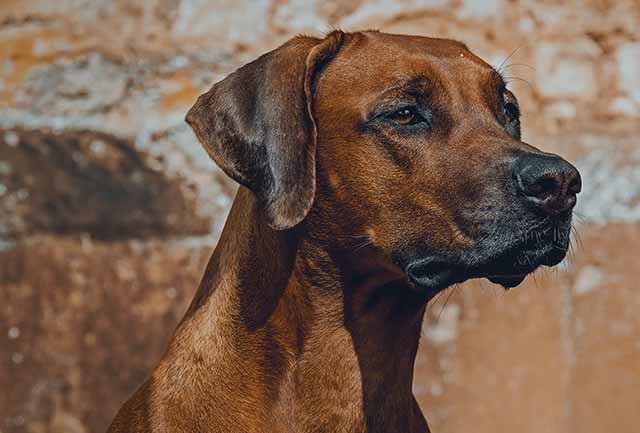
L’emofilia A, chiamata anche deficit di fattore VIII, è il disturbo emorragico più comune nei cani. Causata da una mutazione recessiva legata all’X del gene F8, la malattia compromette fortemente la capacità del sangue di coagulare, il che può portare a sintomi gravi come emorragie interne spontanee o sanguinamento incontrollato dopo lesioni o interventi chirurgici. Questa variante specifica della malattia si verifica nel Rhodesian Ridgeback. Varianti correlate si trovano anche nel setter irlandese e nello schnauzer nano, nel boxer, nel Old English Sheepdog e nel pastore tedesco.

Carcinoma familiare a cellule follicolari tiroidee I & II

Thyroid carcinomas (TCs) are the most common type of endocrine tumours. They can originate from growth of follicular cells of the thyroid gland, which lead to familial or spontaneous thyroid follicular cell carcinomas (FCCs). The carcinomas don’t cause any signs or symptoms early in the disease. As thyroid cancer grows, it may cause swelling in the neck, voice changes and difficulties swallowing. The diagnosis is often before 10 years of age, implying an early onset of disease. FCCs occur in German longhaired pointers and are caused by autosomal recessive inherited gene mutations in the TPO gene. There are two mutations known on chromosome 17, that cause different carcinoma’s: Thyroid follicular cell carcinoma I (C>T) and Thyroid follicular cell carcinoma II (G>A).

Clinical signs include the presence of cervical mass, intermittent cough. In case of a hormone producing mass, alopecia, polyuria, polydipsia and lethargy can be seen.

Ipotiroidismo congenito con gozzo (CHG) – Bulldog francese

L’ipotiroidismo congenito con gozzo (CHG), a volte chiamato semplicemente ipotiroidismo, è un deficit della ghiandola tiroidea, che può causare ritardo della crescita e letargia. Questa variante della malattia, che si trova nel Bulldog francese, è causata da una mutazione recessiva del gene TPO. Varianti simili si verificano nel Rat Terrier e nel Toy Fox Terrier, nel Tenterfield Terrier e nello Spanish Water Dog

Nuovi test per il Rhodesian Ridgeback

Per il Rhodesian Ridgeback abbiamo aggiunto due nuovi test al nostro webshop. I due test possono essere ordinati separatamente e fanno anche parte del pacchetto CombiBreed per il Rhodesian Ridgeback (H575).

H931 Emofilia A (deficit di fattore VIII)
La malattia è caratterizzata dalla mancanza o dalla diminuzione dell’attività del fattore VIII. Il fattore VIII è uno dei principali fattori di coagulazione e consiste in una catena pesante e leggera. Inoltre, il fattore è presente nel sangue legato al fattore di von Willebrand (vWF) in un complesso non covalente.

Aritmie ventricolari H932 e morte improvvisa
Aritmie ventricolari sono battiti cardiaci anormali che hanno origine nelle camere cardiache inferiori e fanno battere il cuore troppo velocemente, troppo lentamente o irregolarmente. Una singola variante missenso nel gene QIL1 è stata associata all’aritmia cardiaca. La variante missenso nel gene QIL1 causa cardiomiopatia mitocondriale caratterizzata da anomalie cristae e aritmie cardiache in un modello canino.

Canine Multiple System Degeneration (CMSD) – Kerry Blue Terrier

Canine Multiple System Degeneration (CMSD) is a progressive, heritable neurological disorder. It is caused by a mutation in the Serine Active Site Containing 1 (SERAC1) gene and is inherited in an autosomal recessive manner. The mutation in the SERAC1 gene causes disruption of phospholipid remodeling and cholesterol trafficking, which are essential for healthy mitochondrial function and neuronal survival. This leads to degeneration of specific brain regions, resulting in the progressive movement disorder seen in Kerry Blue Terriers.

Colore del mantello Locus-C Colourpoint (Siam, Visone, Birmania)

Coat colour in cats is controlled by a wide range of different genes working together. One of these genes involved is the Tyrosinase (TYR) gene. This gene produces an enzyme that is required for melanin production, which gives skin, hair, and eyes their colour. Mutations in this gene cause various degrees of Type 1 Oculocutaneous Albinism (OCA1), a failure to produce pigment. This can range between the distinctive point colouration of the Burmese and Siamese cat, to complete albinism.

Two known autosomal recessive mutations in TYR have been associated with colourpoints: a pattern of colouration that causes a cat’s body to be pale and their extremities to be dark. It is directly caused by temperature differences in which the darker parts of the cat are colder, while the lighter parts are warmer. The first mutation is designated as “cb” and is responsible for Burmese-type point colouration or Burmese colourpoint. The second mutation is designated as “cs” and is responsible for Siamese-type point colouration or Siamese colourpoint. Cats that carry one “cb” allele and one “cs” allele will display Tonkinese or Mink colourpoints instead, an intermediate color between Siamese and Burmese. The “cb” and “cs” variants are both tested here.

The alleles of the mentioned mutations are equal in dominance. They are recessive to the normal genotype (C) and dominant over the alleles for complete albinism (c and c2).

Colore del mantello Locus-D 3 – Cane

Il colore del mantello nei cani è controllato da un’ampia gamma di geni diversi che lavorano insieme. Questi geni sono spesso indicati come “loci”. La diluizione, o D-Locus, corrisponde al gene per la melanofilina, MLPH, che è coinvolto nella distribuzione del pigmento. Le mutazioni autosomiche recessive del D-Locus provocano una “diluizione” dei colori scuri del mantello, rendendoli più chiari e più argentei.

Qualsiasi combinazione di due alleli mutanti si tradurrà in un rivestimento diluito. Questa variante della mutazione D-Locus, designata come d^3, si trova in razze come il Chihuahua, il Mudi ungherese e il Pumi ungherese, il Levriero italiano e lo Shih-Tzu.

Club di razza/Libri genealogici

CombiBreed created packages with relevant and required DNA tests for a breed in consultation with studbooks and breed clubs. Breeders can easily purchase the relevant tests at an affordable rate.

It is possible to make a discount agreement for your members. Your members are able to purchase the relevant tests and/or package in our webshop with a member discount.

Interested? Contact us.

99

Euro

Excl. BTW

Få svar på hvilke raser som er i stamtreet til hunden din

Displasia oculosscheletrica 1 (OSD1) / Displasia retinica (RD) – Labrador Retriever

La displasia oculosscheletrica 1 (OSD1) è una malattia genetica caratterizzata da nanismo e displasia retinica (RD), che può portare a deformità articolari e perdita della vista. Può essere causata da una mutazione recessiva nel gene del collagene, tipo IX, alfa 3 (COL9A3) ed è stata identificata specificamente nel Labrador Retriever. COL9A3 svolge un ruolo essenziale nella salute della cartilagine e nello sviluppo degli occhi. Pertanto, una mutazione in questo gene può portare ad anomalie scheletriche e oculari. Una variante correlata si verifica anche nelle razze Northern Inuit Dog, Tamaskan e British Timber Dog.

Cerebellar Ataxia – Flat-Coated Retriever

Cerebellar Ataxia (CA) is a hereditary neurological disorder affecting the cerebellum, the part of the brain responsible for coordination, balance, and fine motor control. In Flat-Coated Retrievers, the condition is associated with a genetic variant that disrupts normal neuronal function within the cerebellum, leading to impaired signal transmission between nerve cells. As a result, affected dogs progressively lose the ability to coordinate voluntary movements. The disorder is inherited in an autosomal recessive manner, meaning dogs must inherit two copies of the variant to develop clinical signs. Onset typically occurs at a young age, and the disease is progressive over time.

Leucodistrofia a cellule globoidi (GCL, malattia di Krabbes) – Setter irlandese

La leucodistrofia a cellule globoidi (GLD), nota anche come malattia di Krabbe, è un grave disturbo neurologico nei cani. È causata da una mutazione autosomica recessiva del gene della galattosilceramidasi (GALC) che porta a un deficit dell’enzima galattocerebrosidasi. Questo enzima è attivo nei lisosomi (parte della cellula di un animale) ed è fondamentale per la digestione e la rimozione dei rifiuti nelle cellule. A causa della mutazione, le sostanze tossiche si accumulano, causando danni al sistema nervoso, in particolare al cervello e al midollo spinale. La mutazione si trova nel setter irlandese.
Inoltre, una variante strettamente correlata è stata osservata nel Cairn Terrier e nel West Highland White Terrier.

Leucodistrofia a cellule globoidi (GCL, malattia di Krabbes) – Tipo Terrier

La malattia di Krabbe, nota anche come leucodistrofia a cellule globoidi o deficit di GALC, è un grave disturbo metabolico che causa problemi neuromuscolari come debolezza e paralisi. È causata da una mutazione recessiva del gene GALC. La variante analizzata in questo test si verifica nel Cairn Terrier e nel West Highland White Terrier. Una variante strettamente correlata è stata osservata nel setter irlandese.

D-Locus / D-Locus Improved

The dilute gene (MLPH gene) is responsible for the intensity of the coat colour by affecting the distribution of melanin-containing cells. This gene is also known as the D-Locus and dilutes all colours. Besides the hair colour also the colour of the nose is diluted and the colour of the eyes lightens to amber. The Coat Colour D-Locus Improved (MLPH) test (H847) tests for the genetic status of the D-Locus. The D-Locus has two variants (alleles). The allele D is dominant and does not have an effect on the coat colour. Only when the dog has two copies of the recessive allele d the coat colour is diluted. The dilution of black results in grey, also called blue or charcoal. The coat ranges from silver to almost black, but all have a blue nose. Chocolate/brown/liver dilutes into lilac/light tan/Isabella, their noses vary from pink, liver to isabella. Red/yellow/cream dilutes into champagne. In some breeds another, yet unidentified, mutation is present that causes coat colour dilution. This unidentified mutation is known to occur in Doberman Pinscher, French Bulldog, Italian Greyhound, Chow Chow and Shar-Pei.

The Coat Colour D-Locus Improved (MLPH) test encloses the following results, in this scheme the results of the Coat Colour D-Locus Improved (MLPH) test are shown in combination with the possible results for the E-Locus and B-Locus):

D-Locus E-Locus B-Locus Coat Colour Nose/foot pads
D/D Em/Em, Em/E or Em/e B/B or B/b Black, melanistic mask is not visible Black
D/D Em/Em, Em/E or Em/e b/b Brown/chocolate/liver, with melanistic mask Pink to Brown
D/D E/E or E/e B/B,B/b Black, no melanistic mask Black
D/D E/E or E/e b/b Brown/chocolate/liver, no melanistic mask Pink to Brown
D/D e/e B/B,B/b Red/Yellow/Cream Black
D/D e/e b/b Red/Yellow/Cream Pink to Brown
D/d Em/Em, Em/E or Em/e B/B or B/b Black, melanistic mask is not visible Black
D/d Em/Em, Em/E or Em/e b/b Brown/chocolate/liver, with melanistic mask Pink to Brown
D/d E/E or E/e B/B,B/b Black, no melanistic mask Black
D/d E/E or E/e b/b Brown/chocolate/liver, no melanistic mask Pink to Brown
D/d e/e B/B,B/b Red/Yellow/Cream Black
D/d e/e b/b Red/Yellow/Cream Pink to Brown
d/d Em/Em, Em/E or Em/e B/B or B/b Blue/Grey/Charcoal, melanistic mask is not visible Blue to Black
d/d Em/Em, Em/E or Em/e b/b Lilac/Light tan/Isabela, with melanistic mask Pink to Brown
d/d E/E or E/e B/B,B/b Blue/Grey/Charcoal, no melanistic mask Blue to Black
d/d E/E or E/e b/b Lilac/Light tan/Isabela, no melanistic mask Pink to Brown
d/d e/e B/B,B/b Champagne Blue to Black
d/d e/e b/b Champagne Pink to Brown

Congenital Stationary Night Blindness 2 (CSNB2) – Horse

Congenital Stationary Night Blindness 2 (CSNB2) is a genetic retinal disorder characterized by impaired vision in low light conditions. It is caused by an autosomal recessive mutation in the metabotropic glutamate receptor 6 (GRM6) gene, which is essential for transmitting visual signals from rod photoreceptors to ON-bipolar cells in the retina. The mutation disrupts signal transmission in dim light, resulting in night blindness despite a structurally normal eye.

This disorder is distinct from the Leopard Complex (LP)/Appaloosa-associated form of night blindness and was first identified in a Tennessee Walking Horse. The variant has since been reported in additional breeds.

K-Locus

The Beta-defensin gene (CBD103 gene) produces dominant black vs. brindle vs. fawn coat colours. This gene is also known as the K-locus or Dominant black gene. The coat colour is further complicated by the interaction with the E-locus and the A-locus (agouti). The Coat Colour K-Locus (H819) tests for the genetic status of the K-Locus. The K-locus has three variants (alleles). The allele KB is dominant over the alleles kbr and ky; allele kbr is dominant over allele ky. The dominant allele KB, also called dominant black allele, does not allow the agouti gene to be expressed. A dog with at least one copy of the KB allele expresses a base colour, which is determined by the B- and E-Locus. The allele kbr results in brindling and allows the agouti to be expressed but causes brindling of the agouti patterns. The A-Locus (agouti) represents several different colours, such as fawn/sable, wild sable, tan points and recessive black. The allele ky allows the agouti to be expressed without brindling. When a dog has two copies of the ky allele (homozygous ky/ky) the agouti locus determines the dog’s coat colour. The test does not discriminate between the alleles kbr and ky.

The Coat Colour K-Locus test encloses the following results:

K-Locus Coat Colour
KB/KB Self-colored (solid color in pigmented areas), hides expression of the A-locus, basic colour determined by B- and E-locus, only allele KB will be passed on to an offspring
KB/N Self-colored (solid color in pigmented areas), hides expression of the A-locus, basic colour determined by B- and E-locus. The test does not discriminate between the alleles kbr and ky, N can be allele kbr or ky. The dog is KB/kbr or KB/ky, either allele KB or kbr/ky will be passed on to an offspring
N/N The test does not discriminate between the alleles kbr and ky. N can be allele kbr or ky. The dog is kbr/kbr, kbr/ky or ky/ky. If the dog is kbr/kbr: Brindling and expression of A-locus, it can only pass on allele kbr to an offspring. If the dog is kbr/ky: Brindling and expression of A-locus, either allele kbr or ky will be passed on to an offspring. If the dog is ky/ky: Expression of A-locus without brindling, only allele ky will be passed on to an offspring.
Go to Top